
Course Solutions
Browse all available Sophia.org course solutions.
Browse all available Sophia.org course solutions.
92 courses currently available

Sophia Learning's Medical Terminology course introduces you to the language of healthcare. You’ll learn how medical terms are built using prefixes, root words, and suffixes—and how these components come together to describe anatomy, body systems, and clinical conditions. You’ll explore terminology across a wide range of topics, including major organ systems, diagnostic procedures, pharmacology, and professional healthcare communication. By the end of the course, you’ll be able to define, construct, and interpret medical terms with confidence. You’ll translate everyday language into accurate medical vocabulary, recognize terms related to both healthy functioning and disease, and use terminology fluently in medical communication such as clinical documentation. The course also builds your understanding of terminology used in medication orders and imaging reports and emphasizes clear, ethical, and culturally sensitive communication, which are essential skills in every healthcare setting.
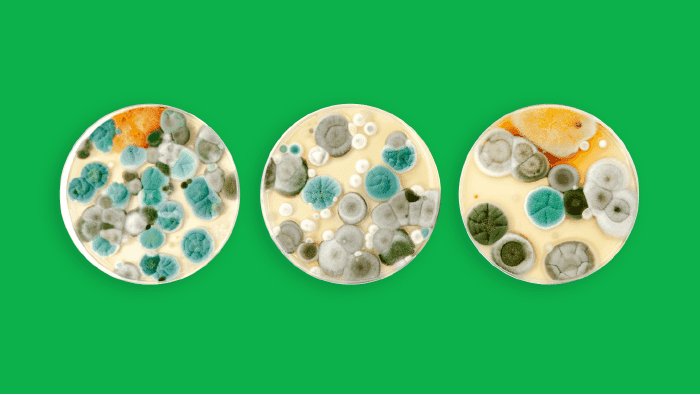
How are our day to day lives affected by organisms too small to see with the naked eye? Sophia Learning’s Microbiology course introduces students to the field of microbiology including the tools used, organisms studied, methods of clinical testing, control of microorganisms, and the role of microorganisms in health and disease. The course also covers essential biological concepts as they relate to microbiology, including metabolic processes, genetics, evolution, genetic engineering, biotechnology, immunology, and more. The content is intended to be interesting and relevant for learners studying allied health or preparing for non-STEM careers while also providing clear information to provide a strong foundation for STEM majors. It's recommended that you complete this course simultaneously with the accompanying Microbiology Lab course for the best experience. Please plan ahead. While you can take as many Sophia courses as you’d like each month with your membership, you are only allowed to be active in two courses at a time. Taking this lecture course along with the lab course will occupy your two-course limit.
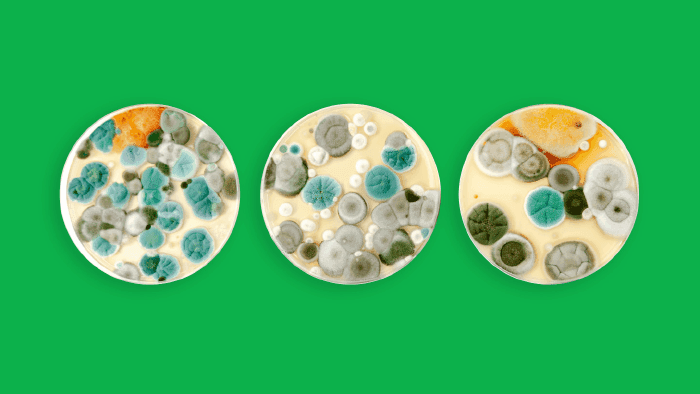
How are our day to day lives affected by organisms too small to see with the naked eye? Sophia Learning’s Microbiology course is designed to introduce you to the field of microbiology including the tools used, organisms studied, methods of clinical testing, control of microorganisms, and the role of microorganisms in health and disease. The course also covers essential biological concepts as they relate to microbiology, including metabolic processes, genetics, evolution, genetic engineering, biotechnology, immunology, and more. The content is intended to be interesting and relevant for learners studying allied health or preparing for non-STEM careers while also providing clear information to provide a strong foundation for STEM majors. It's recommended that you complete this course simultaneously with the accompanying Microbiology Lab course for the best experience. Please plan ahead. While you can take as many Sophia courses as you’d like each month with your membership, you are only allowed to be active in two courses at a time. Taking this lecture course along with the lab course will occupy your two-course limit.
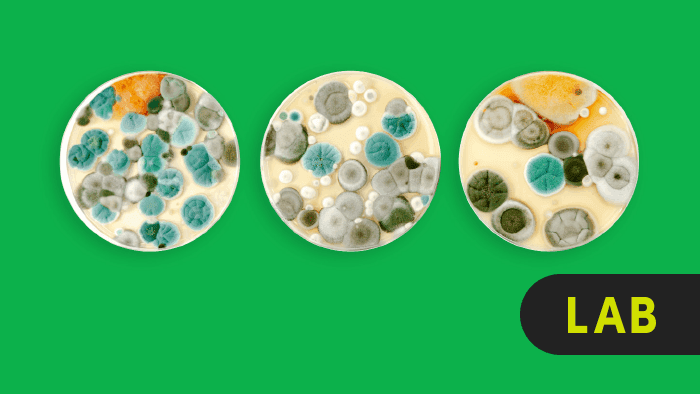
Sophia Learning’s science lab courses are designed to be used with the accompanying lecture course, creating a robust investigation and journey into the natural sciences. It’s recommended that you complete this Microbiology Lab course simultaneously with Microbiology, so you fully experience the application and real-world relevance of the subject. In this lab course, you’ll apply the scientific method, explore phenomena, and exercise critical thinking skills using virtual lab simulations from Labster, a leader in interactive science. All labs are performed online without any need for specialized science equipment. This lab course reinforces topics from the lecture course such as bacterial cell structure and function, microscopy, microbe genetic and biochemical characteristics, and disease pathogenicity. To meet the lab requirement, you’ll be expected to write lab reports and answer formative quiz questions as you advance through the course. Important! Please plan ahead. While you can take as many Sophia courses as you’d like each month with your membership, you are only allowed to be active in two courses at a time. Taking this lab course along with the lecture course will occupy your two-course limit. This course requires a reliable internet connection and a laptop or desktop computer that meets minimum specifications.

Sophia Learning's Microeconomics course is designed to help students explore and interpret the behavior of individual consumers and firms in the marketplace. Through this exploration, students will learn how to evaluate decisions, both public and private, with an eye toward production, consumption, and transfer of wealth. Students will also learn how to apply conceptual principles of microeconomics in practical ways to everyday life.
Sophia Learning’s Operations Management course is designed to teach students the process of turning resources into goods and services, from planning, design and development, to organizing resources and labor, to managing quality and making continuous improvements. Throughout the course, you will follow one company from an idea through a product launch and successful operation. The course also explores career paths in the broad field of operations management and considers the strategies future leaders need to be successful.
Organizational Behavior is the study of how organizations work as a whole and how individuals and groups work together. Sophia Learning's Organizational Behavior course is an essential class for learners pursuing careers in business, organizational management, or leadership in any industry. At the beginning of this class, students learn the structures of organizations to understand the relationships among different levels and units within the organization and how the organization functions in its external environment; they will also learn why organizations change over time and how to manage this change effectively. Learners will then use established theories of psychology and sociology to understand a range of personal and group behaviors in the context of management: how to recruit and train employees with diverse skills and from diverse backgrounds; how to motivate workers and train them for personal and professional advancement; how to manage unwanted behaviors, conflict, and office politics; and how to find a path to leadership and then lead effectively.

Sophia Learning’s Personal Finance course provides students with a comprehensive understanding of essential financial principles and the practical skills necessary for financial resilience. The course begins with an exploration of why finance matters, the psychology of money, and the importance of financial planning. Students will learn to create and reassess personal budgets using various metrics and goals. Students will gain a thorough understanding of saving principles, including the importance of long-term saving, the power of compound interest, and the time value of money. The course then delves into the complexities of credit, covering how to develop and use credit wisely, make informed transportation and housing decisions, and manage debt. Students will also explore the role of insurance in protecting personal and financial well-being, learning about different types of insurance and their specific uses. Additionally, the course introduces investment principles, covering investment strategies and portfolio diversification. Finally, students will learn about retirement and estate planning, equipping them with the knowledge to secure their financial future and protect their wealth. By the end of the course, students will be well-prepared to manage their personal finances and make strategic financial decisions throughout their lives.

Sophia Learning’s Precalculus course prepares you for the skills needed for Calculus I. In this course, you will build off the topics in Sophia’s College Algebra by evaluating and graphing functions, and solving systems of equations using matrices. You will then investigate different types of functions by graphing power, polynomial, and rational functions. By solving exponential and logarithmic equations, you will also model real-world situations. Then, you will move into the trigonometry portion of Precalculus by analyzing trigonometric functions through graphs, equations, and identities and solving oblique triangles using the law of sines and the law of cosines. You will also apply trigonometric concepts to the polar coordinates system and the trigonometric form of complex numbers. Finally, you will wrap up the course with supplementary topics which include vectors, writing equations of conic sections, working with arithmetic and geometric sequences and series, and expanding powers of binomials.